Keep and Spend Money for Education and Other Purposes
Lets the state keep money it would otherwise refund under TABOR and spend it on schools and children's programs.
Cheat sheet The whole measure in 30 seconds tap to open
The state may keep some or all of the revenue TABOR would otherwise refund, spending it on K-12 education, children's programs, and after ten years any other purpose.
Current TABOR refunds and current funding levels for schools, children's programs and other state purposes stay as they are.
Strongest case for
It raises teacher pay, reduces class sizes and improves career and technical education in every district in the state, against a state-identified shortfall of $3.5 billion - about $4,000 per pupil.
Strongest case against
It is essentially a tax increase: it permanently eliminates or reduces TABOR refunds, which are a taxpayer right and real money for households already stretched thin.
Watch out: The headline ceiling and the real amount are very different. The measure lets the state keep up to $4.6 billion above the TABOR limit in year one, but it is only expected to actually keep about $500 million - because that is all the state is projected to collect above the limit. Also: after ten years the children's earmark loosens to 'any purpose,' and if Proposition 137 also passes it can shrink what NN actually keeps.
What this actually does
TABOR caps how much money the state can keep each year; anything above the cap gets refunded to taxpayers. This raises that cap by the amount the state spends on public education, letting the state keep money it would otherwise refund. For the first ten years the money goes to K-12 - teacher pay and retention, smaller class sizes, career and technical courses - and to children's programs like full-day preschool and child care. After ten years, whatever is left over can be spent on anything the legislature chooses. In practice it is expected to wipe out TABOR refunds for the next two years.
What your vote means
The state may keep some or all of the revenue TABOR would otherwise refund, spending it on K-12 education, children's programs, and after ten years any other purpose.
Current TABOR refunds and current funding levels for schools, children's programs and other state purposes stay as they are.
On every measure, yes means change something and no means leave it alone.
Easiest thing to get wrong
Read this twice
The headline ceiling and the real amount are very different. The measure lets the state keep up to $4.6 billion above the TABOR limit in year one, but it is only expected to actually keep about $500 million - because that is all the state is projected to collect above the limit. Also: after ten years the children's earmark loosens to 'any purpose,' and if Proposition 137 also passes it can shrink what NN actually keeps.
The case each side makes
Straight from the state's official booklet, shortened. These are arguments as each side makes them — not findings of fact, and not our view.
Why people say yes
- It raises teacher pay, reduces class sizes and improves career and technical education in every district in the state, against a state-identified shortfall of $3.5 billion - about $4,000 per pupil.
- It redirects money the state already collects rather than raising taxes, and pairs the money with new auditor and school district reporting on how it was spent.
- The current revenue limit does not keep pace with the rising cost of educating and caring for children, so the state keeps falling behind on child care and preschool.
Why people say no
- It is essentially a tax increase: it permanently eliminates or reduces TABOR refunds, which are a taxpayer right and real money for households already stretched thin.
- It eventually hands the state over $5 billion a year, and school funding has already risen 25 percent in five years while enrollment keeps falling - the state should prove it has cut waste first.
Where this sits politically
high confidence The only measure with a recorded party vote, and it is the clearest signal on the ballot: Senate Bill 26-135 passed the Senate 23-12, with all 23 Democrats in favor and all 12 Republicans against. Four Democratic prime sponsors, signed by a Democratic governor, funded by teachers unions, opposed by the anti-tax slate.
How we place the needle and why it is an estimate, not a measurement
We read four things, all of them public and documented:
- Who filed it and what they are affiliated with.
- The recorded party vote, where one exists. On this ballot only Proposition NN has one, because it is the only measure the legislature referred.
- Which side of the political infrastructure is paying for each campaign.
- Which direction the policy moves compared with current law.
Confidence is high when all four point the same way and low when they contradict each other. A low-confidence needle is telling you the measure genuinely does not sort neatly — Amendment 86 is the clearest case, with conservative sponsors and anti-gerrymandering content.
This is our editorial read, not a measurement. A citizen initiative has no party sponsor, so for 13 of these 14 measures there is no official partisan label to report — only inference. Use the needle to get oriented, then read the measure and decide for yourself.
What it costs
Reduces taxpayer refunds by $329.9 million in 2026-27 and $521.0 million in 2027-28, eliminating TABOR refunds in both years. A single filer earning $100,000 loses a $28 refund in 2027 and $68 in 2028. First-year spending: $241.5 million to K-12 and $241.5 million to children's programs, with $153.1 million shifted out of the general budget.
Who it touches: Every Colorado taxpayer who would have received a TABOR refund; K-12 schools, teachers and students; preschool and child care programs.
Who put it on your ballot
Democratic — a party-line referral
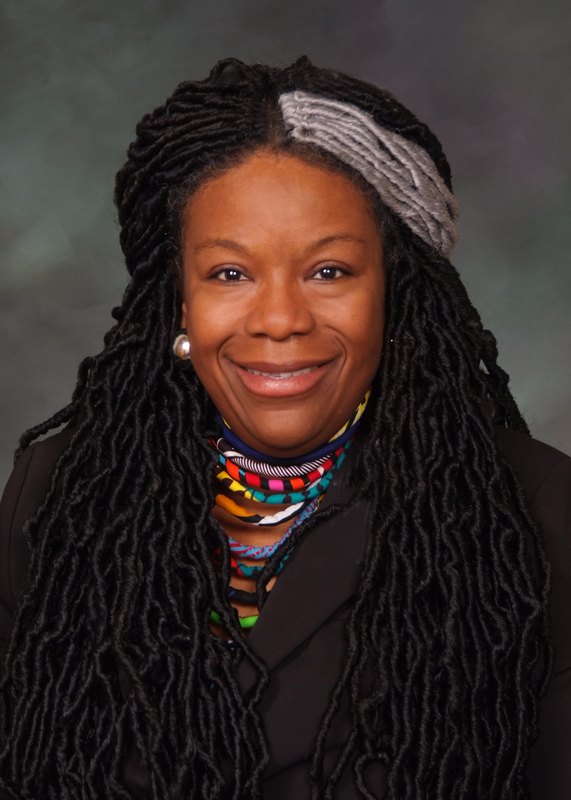
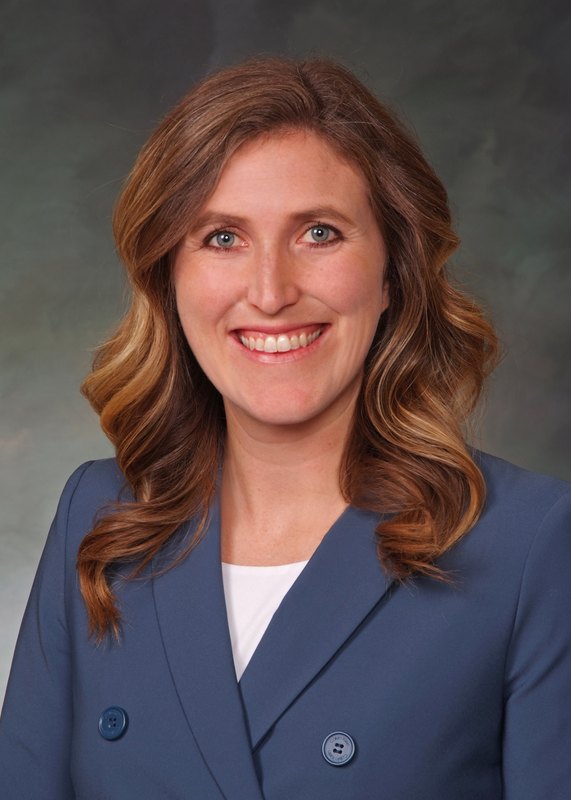
Legislators who sponsored the bill



Campaigning for it
Campaigning against it
This is the only one of the 14 that has actual bill sponsors, because it is the only one the legislature referred. All four prime sponsors are Democrats, and the Senate passed it 23-12 on May 12, 2026 — 23 Democrats in favor, 12 Republicans against. Signed by Gov. Jared Polis (D).
Who is paying for the ads
Money for it
Money against it
What the money tells you
A well-funded teacher-and-education campaign for it; the opposition is the same conservative anti-tax slate that opposes Amendment 87, with no single large dedicated committee.
Figures are a late-September 2026 snapshot from TRACER campaign-finance filings and will have moved since. A committee marked slate spreads one total across several measures — do not read its number as spending on this measure alone.
Questions people ask
Common questions (6)
The things people want to know before they vote, answered from primary sources where they exist. Every answer was drafted with AI assistance from retrieved documents, then read and approved by a person. Figures carry the year they refer to.
How does Colorado rank among states in K-12 funding per student, and what does the state currently spend compared with other states?
Colorado ranks in the middle of the pack nationally for K-12 per-pupil funding, spending less than the national average.
According to the U.S. Census Bureau's 2024 Annual Survey of School System Finances, Colorado spends $15,908 per public school student. This falls below the nationwide average of $17,619. Rankings and estimates vary slightly depending on the source: * Education Data Initiative (2026): Ranks Colorado 28th in per-pupil spending. * National Education Association (2024): Estimates Colorado spends $16,889 per student, ranking it 21st in the nation.
Supporters of Proposition NN highlight this funding gap. They argue Colorado must retain refunds under the Taxpayer's Bill of Rights (TABOR) to reach the national average, increase teacher pay, and reduce class sizes.
Opponents point out that Colorado's education spending is already increasing. The Common Sense Institute reports that total public education revenue in the state rose 21% between 2020 and 2025. Opponents argue taxpayers should keep their refunds instead of expanding the state budget.
How much money is at stake each year under this measure, and where would it go?
Proposition NN allows Colorado to keep an estimated $329.9 million in the 2026-27 budget year and $521.0 million in 2027-28 to fund education instead of refunding it to taxpayers.
The Taxpayer's Bill of Rights, or TABOR, caps how much revenue the state can keep each year and refunds any excess. This measure raises that cap by the amount the state spends on public education. For the first ten years, the retained money must fund K-12 schools and children's programs. After ten years, the legislature can spend the funds on any purpose.
According to the 2026 Legislative Council Blue Book, the measure eliminates TABOR refunds for the next two years. The fiscal note estimates these impacts: * Taxpayer refunds reduced: $329.9 million in 2026-27 and $521.0 million in 2027-28. * First-year spending: $241.5 million to K-12 and $241.5 million to children's programs, including $153.1 million shifted from the general budget. * Individual impact: A single filer earning $100,000 loses a $28 refund in 2027 and $68 in 2028.
Supporters say the measure funds teacher pay and smaller classes without raising tax rates. Opponents note it permanently reduces taxpayer refunds and allows the state to spend the money on unrelated programs after a decade.
What is the TABOR cap and how does it limit what the state can keep?
The TABOR (Taxpayer's Bill of Rights) cap is a constitutional limit on how much tax revenue the State of Colorado can keep and spend each year. Added to the state constitution by voters in 1992, the cap grows annually based on a strict formula tied to inflation plus population growth.
When the state collects revenue that exceeds this limit, the excess is called a "TABOR surplus". By law, this surplus must be refunded to taxpayers unless voters specifically approve a ballot measure letting the state keep it. Measure NN asks voters for exactly this permission.
The cap is a central debate in Colorado politics. Supporters of the cap argue it protects taxpayers from unchecked government expansion, provides budget predictability, and ensures families get their money back when the economy booms. Critics argue the cap's formula does not grow fast enough to cover the actual rising costs of state services like K-12 education and healthcare. They note this creates a paradox where the state must cut funding for programs even in years when it collects a surplus of revenue.
How does Colorado's current per-pupil funding for K-12 public education compare to the national average and neighboring states?
According to the U.S. Census Bureau's fiscal year 2024 data, Colorado spends $15,908 per public school pupil, which is below the national average and places it in the middle of its six neighboring states.
The fiscal year 2024 current spending per pupil for Colorado and its neighbors is: * Wyoming: $21,004 * New Mexico: $17,664 * National average: $17,619 * Nebraska: $16,147 * Colorado: $15,908 * Kansas: $15,558 * Oklahoma: $12,162 * Utah: $11,347
Measure NN lets the state keep revenue above the limit set by the Taxpayer's Bill of Rights (TABOR), a law that caps how much money the state can keep and refunds the rest. The retained money would go to K-12 education and children's programs. Supporters argue this measure is necessary to increase school funding and close the spending gap between Colorado and the national average. Opponents note that the measure would eliminate TABOR refunds for the next two years. According to the state's fiscal note, a single filer earning $100,000 would lose a $28 refund in 2027 and a $68 refund in 2028.
The fiscal note mentions shifting $153.1 million out of the general budget; what state programs currently rely on those specific funds?
The $153.1 million is not currently tied to specific programs because the state's General Fund is a flexible pool of money, but shifting it means less funding is available for the core services it typically supports.
The General Fund is Colorado's primary operating budget, funded mostly by income and sales taxes. Because these dollars are not earmarked by law, the legislature decides how to spend them annually. The largest departments relying on the General Fund are Health Care Policy and Financing (which administers Medicaid), K-12 education, higher education, human services, and corrections.
For the 2026-2027 fiscal year, sources disagree slightly on the exact budget totals: the National Association of State Budget Officers reports $49.5 billion in total spending with $17.3 billion from the General Fund, while the Colorado House Democrats report $46.8 billion total with $17.4 billion from the General Fund (both 2026).
Supporters of Measure NN argue that shifting these funds guarantees they will be spent on schools and children's programs rather than competing with other priorities. Opponents argue that removing $153.1 million from the General Fund will force the legislature to cut funding for other state services, because Colorado is constitutionally required to pass a balanced budget.
How much money would taxpayers in different income brackets lose in expected TABOR refunds over the next two years?
Under Proposition NN, taxpayers would lose their entire expected TABOR refunds for the next two budget years, with the exact amount depending on their income and filing status. The Taxpayer's Bill of Rights (TABOR) is a constitutional amendment that caps how much revenue the state can keep each year. It requires any excess to be refunded to taxpayers.
According to the 2026 Colorado Blue Book published by the nonpartisan Legislative Council Staff, the measure eliminates an estimated $329.9 million in refunds in 2026-27 and $521 million in 2027-28. The Blue Book estimates the following losses for specific taxpayers: * A single filer earning $50,000 loses $21 in 2027 and $39 in 2028. * A married couple earning $75,000 loses $56 in 2027 and $86 in 2028. * A single filer earning $100,000 loses $28 in 2027 and $68 in 2028.
Supporters say the measure redirects small individual refund checks into meaningful investments for public schools, such as teacher pay and smaller class sizes. Opponents argue it permanently raises the state's revenue cap. They say this allows the government to keep money that belongs to taxpayers without guaranteeing it stays in education after ten years.
Go deeper, if you want
We had two AIs summarize this independently Minor differences
Both models got the same official text, the same instructions, and could not see each other's answer. Here is each one in its own words.
Claude
TABOR caps how much money the state can keep each year; anything above the cap gets refunded to taxpayers. This raises that cap by the amount the state spends on public education, letting the state keep money it would otherwise refund. For the first ten years the money goes to K-12 - teacher pay and retention, smaller class sizes, career and technical courses - and to children's programs like full-day preschool and child care. After ten years, whatever is left over can be spent on anything the legislature chooses. In practice it is expected to wipe out TABOR refunds for the next two years.
Flagged: The headline ceiling and the real amount are very different. The measure lets the state keep up to $4.6 billion above the TABOR limit in year one, but it is only expected to actually keep about $500 million - because that is all the state is projected to collect above the limit. Also: after ten years the children's earmark loosens to 'any purpose,' and if Proposition 137 also passes it can shrink what NN actually keeps.
Gemini
Proposition NN allows the state government to keep money it normally has to give back to taxpayers as TABOR refunds. For the first ten years, this extra money must be spent on K-12 schools and programs that help children, like preschool and child care. After ten years, the state must keep funding schools but can spend the rest of the money on anything the legislature chooses.
Flagged: After ten years, the state can spend a large portion of the kept money on anything it wants, not just education or children's programs.
Where they came apart
- Both are accurate on the money, and Gemini usefully adds the two years together ($850.9 million) where Claude lists them separately.
- The two picked different catches and both are real. Gemini: after ten years the earmark loosens and the legislature can spend the remainder on anything. Claude: the ceiling and the reality are wildly different — the measure authorizes keeping up to $4.6 billion above the TABOR limit in year one, but the state is only expected to actually keep about $500 million.
- Claude also flags that Proposition 137, if it passes too, can shrink or eliminate what NN actually keeps. Gemini does not.
The comparison notes were written by Claude — one of the two models grading the contest — which is exactly why both summaries are printed above them in full.
The other model's take on cost and reach second opinion
Cost: The measure is expected to eliminate TABOR refunds for the 2026-27 and 2027-28 budget years, reducing taxpayer refunds by over $850 million total in those years. This money will instead increase state spending on K-12 education, children's programs, and local property tax reimbursements.
Who it touches: Colorado taxpayers, public school teachers and students, and families who use child care and preschool programs.
Did this explanation help?
Rate the explanation, not the measure. It tells us what to write better.
Discussion
Disagreement is welcome. Personal attacks are not.
No comments yet. Be the first.
Source: 2026 Colorado State Ballot Information Booklet (the "Blue Book"), Legislative Council of the Colorado General Assembly, Research Publication No. 842. Read the original.